


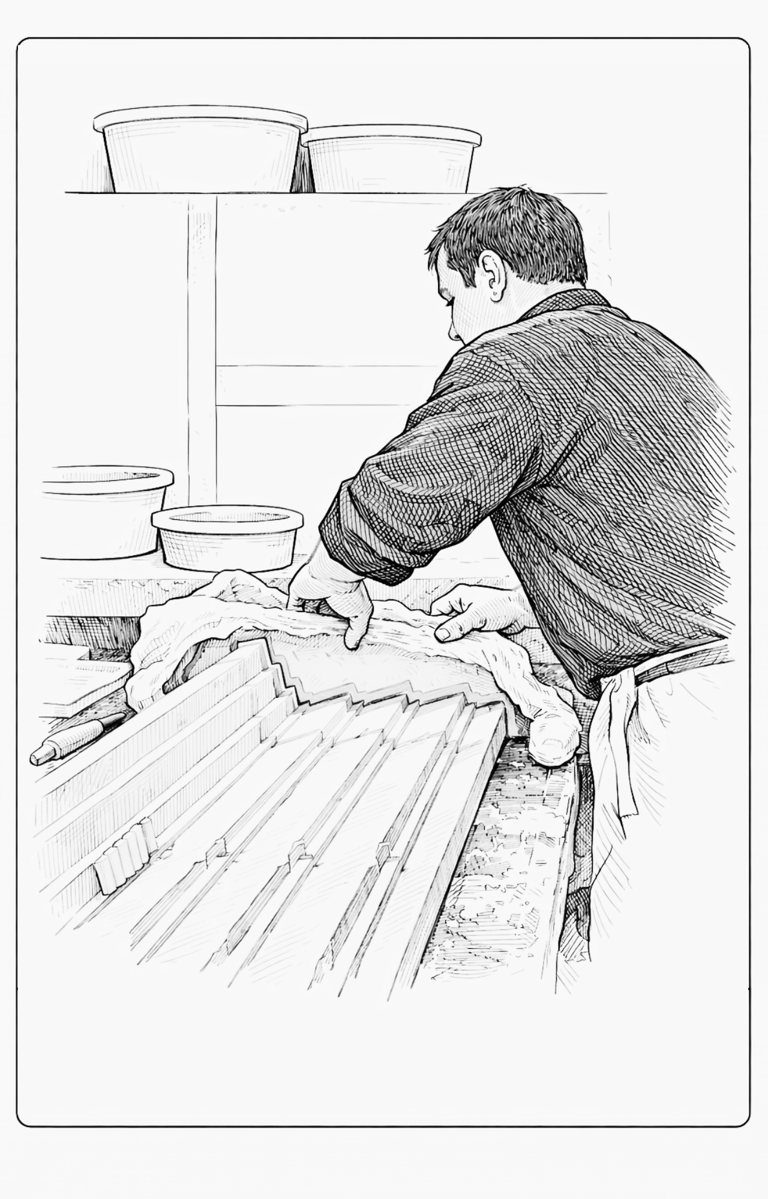
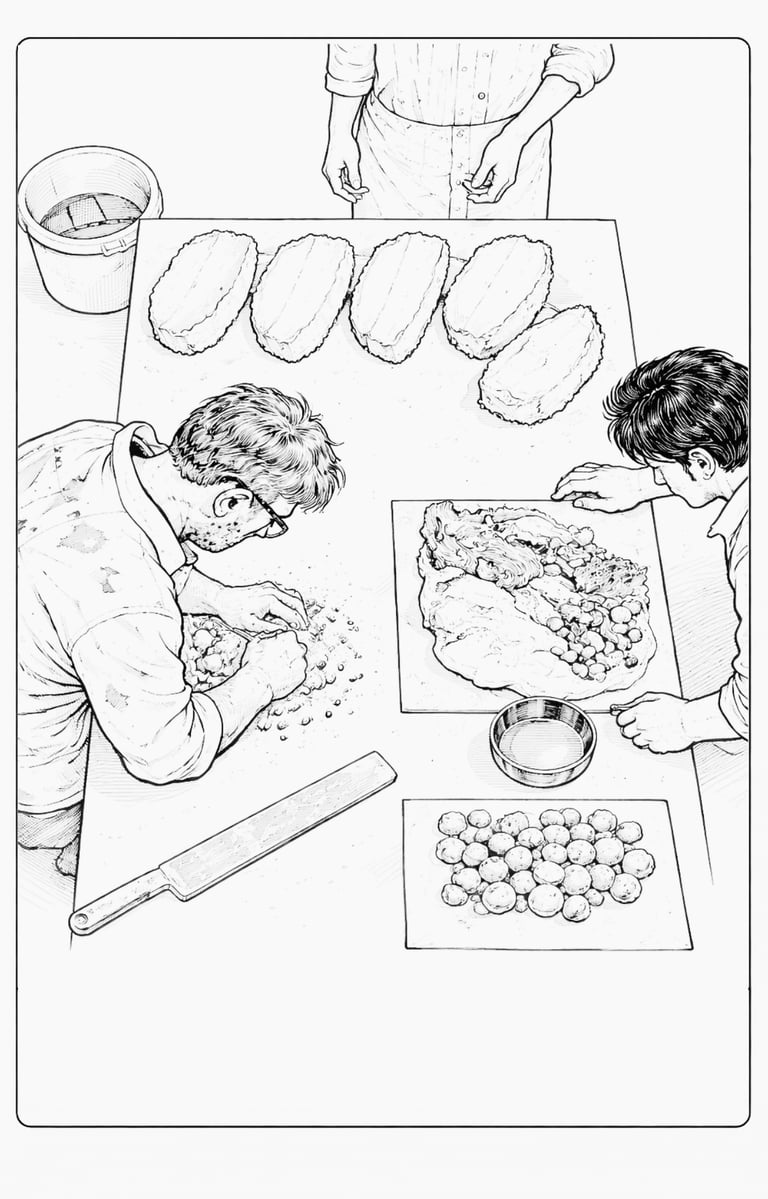
Created from a combination of plaster and fiber, staff is a lightweight, malleable material that can be used to create volumes, ornaments, and architectural elements with precision.
Appearing in the early 19th century, in the aftermath of the French Revolution, the profession of ornamental plasterer developed in response to the destruction and fire risks associated with wooden ceilings in bourgeois apartments. Non-combustible and quick to install, staff emerged as a safe and durable decorative alternative.
Heir to traditional molding techniques, this French craftsmanship is now inseparable from the ceilings decorated with rosettes, cornices, and moldings that characterize 19th-century architecture.
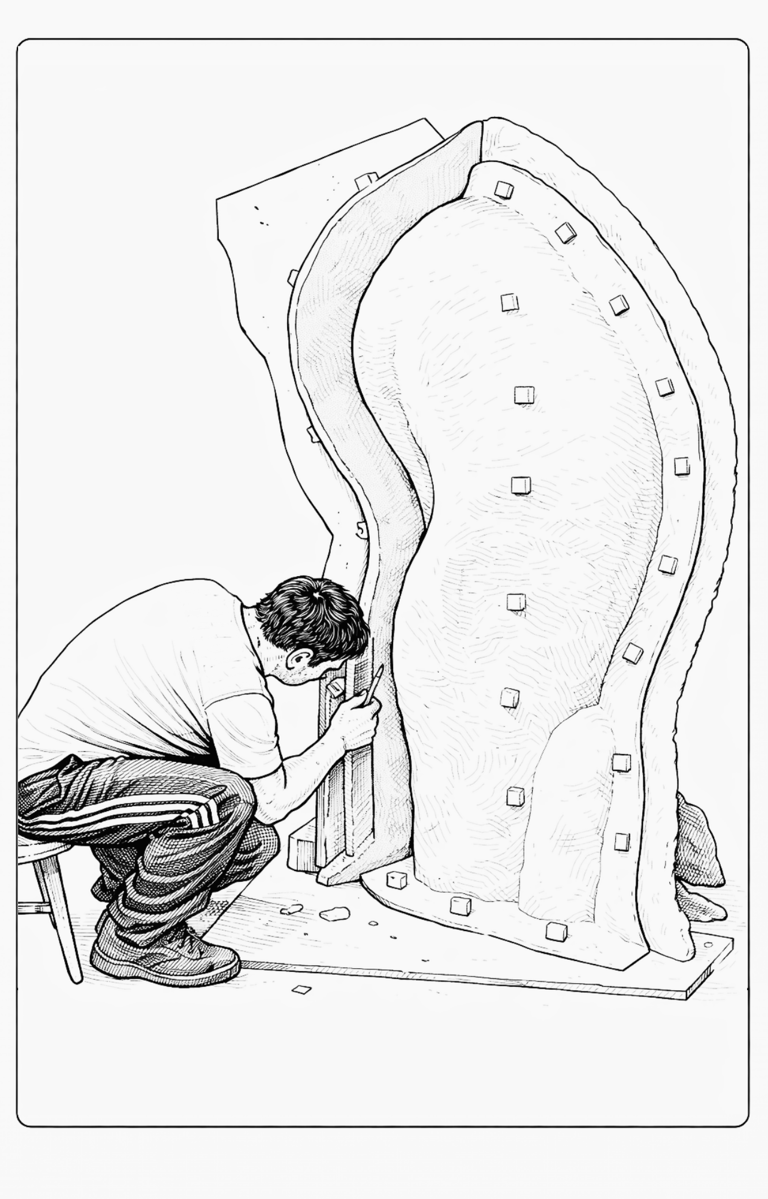
Statue casting is a skill that allows shapes and volumes to be reproduced with great accuracy, capturing every detail of an original work.
The profession of statue caster originated in ancient Rome, where casting techniques were used to reproduce Greek sculptures and portraits, ensuring their dissemination and preserving their memory. Plaster became the material of choice for studying, transmitting, and preserving forms.
As the heir to these ancient practices, the statuary mold maker continues to perpetuate a skill that is essential to our artistic heritage, serving restoration, reproduction, and contemporary creation.
Stucco is a decorative material made from a subtle blend of gypsum, lime, collagen, and pigments, allowing it to imitate stone or marble while retaining a high degree of freedom in terms of modeling.
Its origins date back to ancient times, particularly in Egypt, where it was used as mortar and cladding. Stucco then developed in Greek and Roman civilizations before passing through the centuries. The craft of stucco work is built around this demanding technique, which lies at the intersection of sculpture and architecture.
Between illusion and authenticity, this ancestral craft connects decorative art to architecture and remains an essential part of architectural heritage today.